安福路 × 小红书:从内容种草到街区体验Anfu Road × Xiaohongshu: From Content Discovery to District Experiences
营销案例研究 · 内容种草 · 线上线下互动Marketing case study · Content discovery · Online–offline interaction
以安福路与小红书为例,分析内容种草如何连接用户认知、到访决策与街区体验,以及体验分享如何反哺传播。An analysis of how Anfu Road and Xiaohongshu connect content discovery with user recognition, visit decisions and district experiences, and how shared experiences feed communication.
研究与人群洞察Research & audience insights
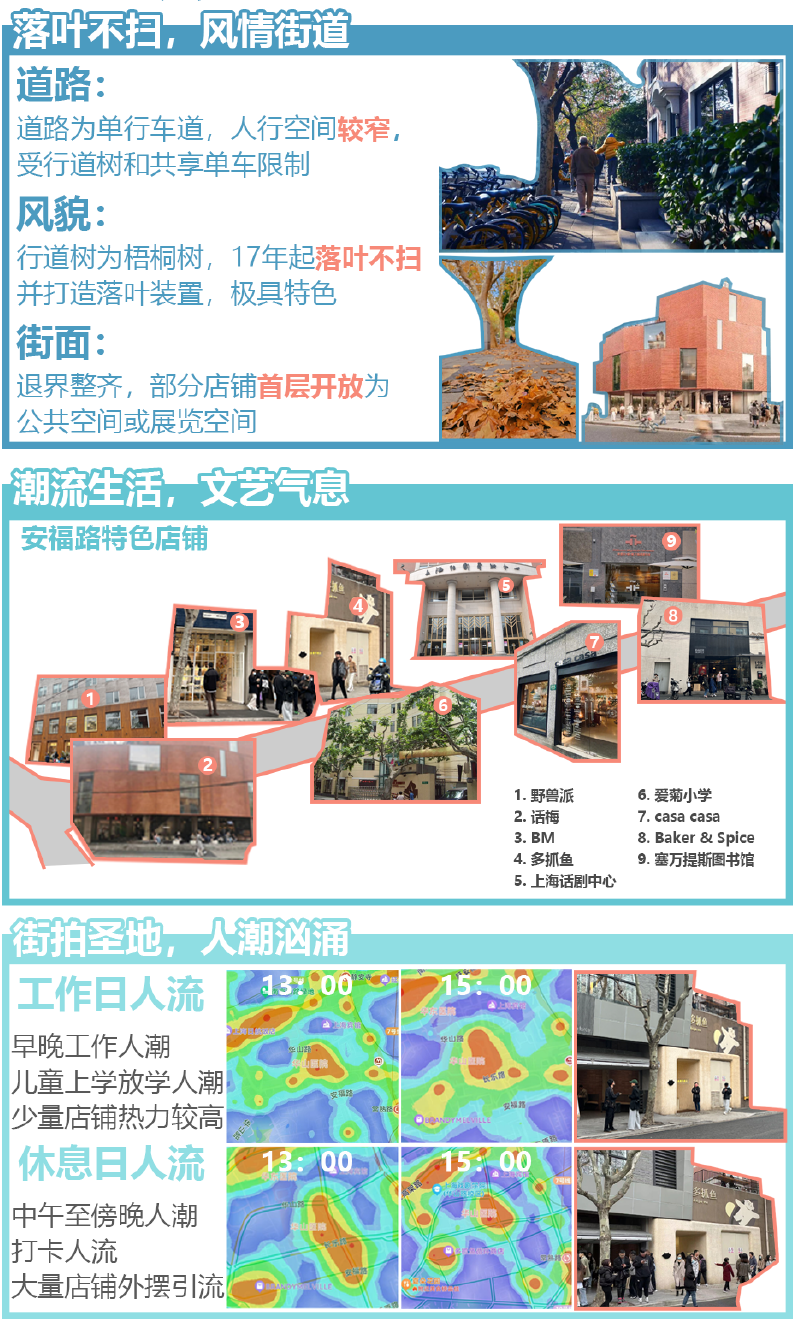
围绕安福路与小红书的互动,结合资料检索、实地踏勘、问卷与访谈,分析用户如何在线上认识街区、形成到访意愿,并将线下经历带回平台。我的工作集中在人群画像、社会互动关系与行动者网络分析,并参与实地调研、问卷发放、访谈及摘要与小结。研究从用户动机出发,串联内容创作者、品牌商家、游客与居民之间的关系。The study examined interactions between Anfu Road and Xiaohongshu through desk research, field observations, a questionnaire and interviews: how people discover the district online, decide to visit and share their experiences on the platform. My work focused on audience profiles, social relationships and actor-network analysis, alongside shared fieldwork, questionnaire distribution, interviews, the abstract and conclusion. User motivations provided a starting point for mapping relationships among creators, brands, visitors and residents.
用户在内容里寻找什么What users look for in content
购物者关注品牌与商品,逛街游客寻找路线与新鲜体验,时尚和摄影人群关注穿搭、氛围与拍摄场景,内容创作者则寻找能持续表达个人风格的选题。同一个安福路,可以被写成购物指南、咖啡攻略、街拍灵感或步行路线。小红书把这些不同需求转化为可发现、可收藏、可讨论的内容,让用户先在平台上形成对街区的认识,再决定如何到访。Shoppers look for brands and products; casual visitors seek routes and new experiences; fashion and photography users look for styling, atmosphere and settings; creators seek stories that express their personal style. Anfu Road can become a shopping guide, coffee itinerary, street-style reference or walking route. Xiaohongshu turns these needs into discoverable, saveable and discussable content, helping users understand the district before planning a visit.
内容传播中的角色与关系Roles and relationships in content circulation
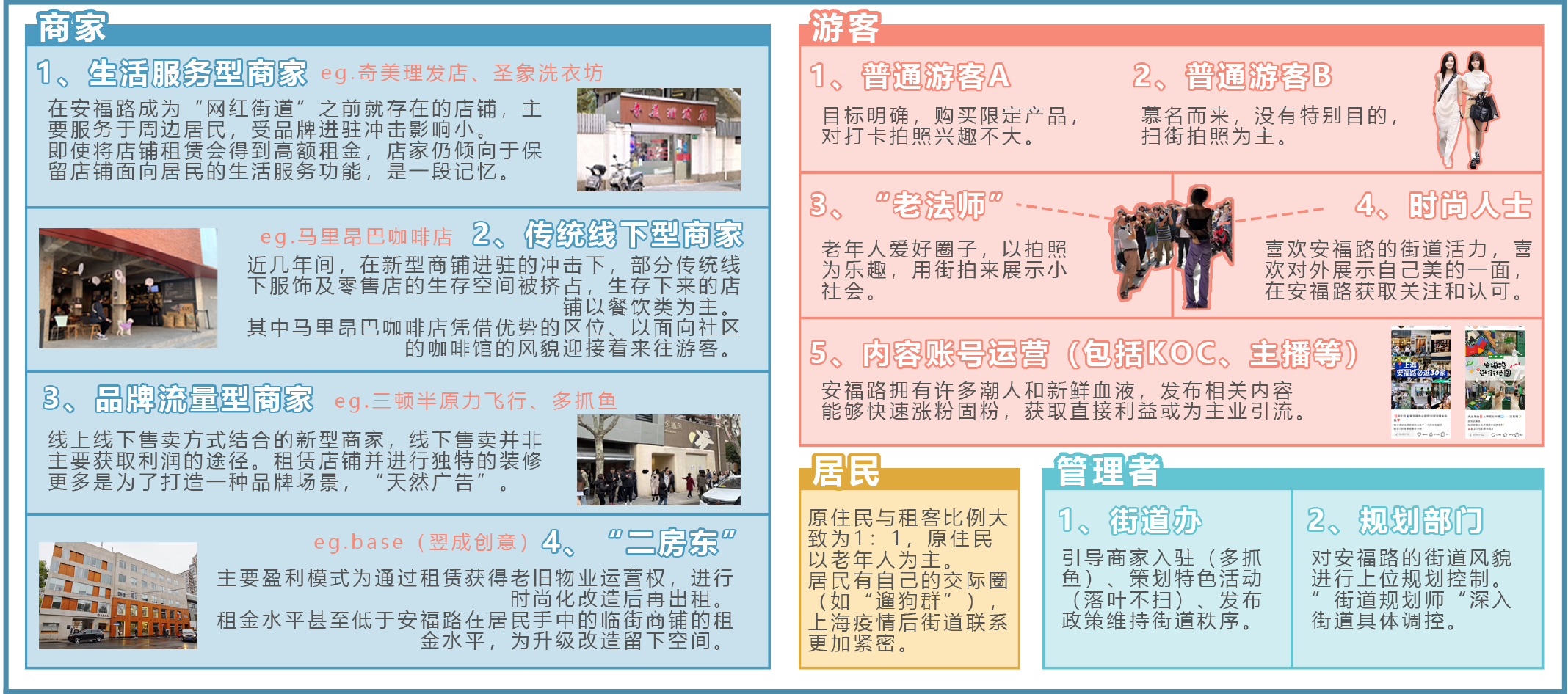
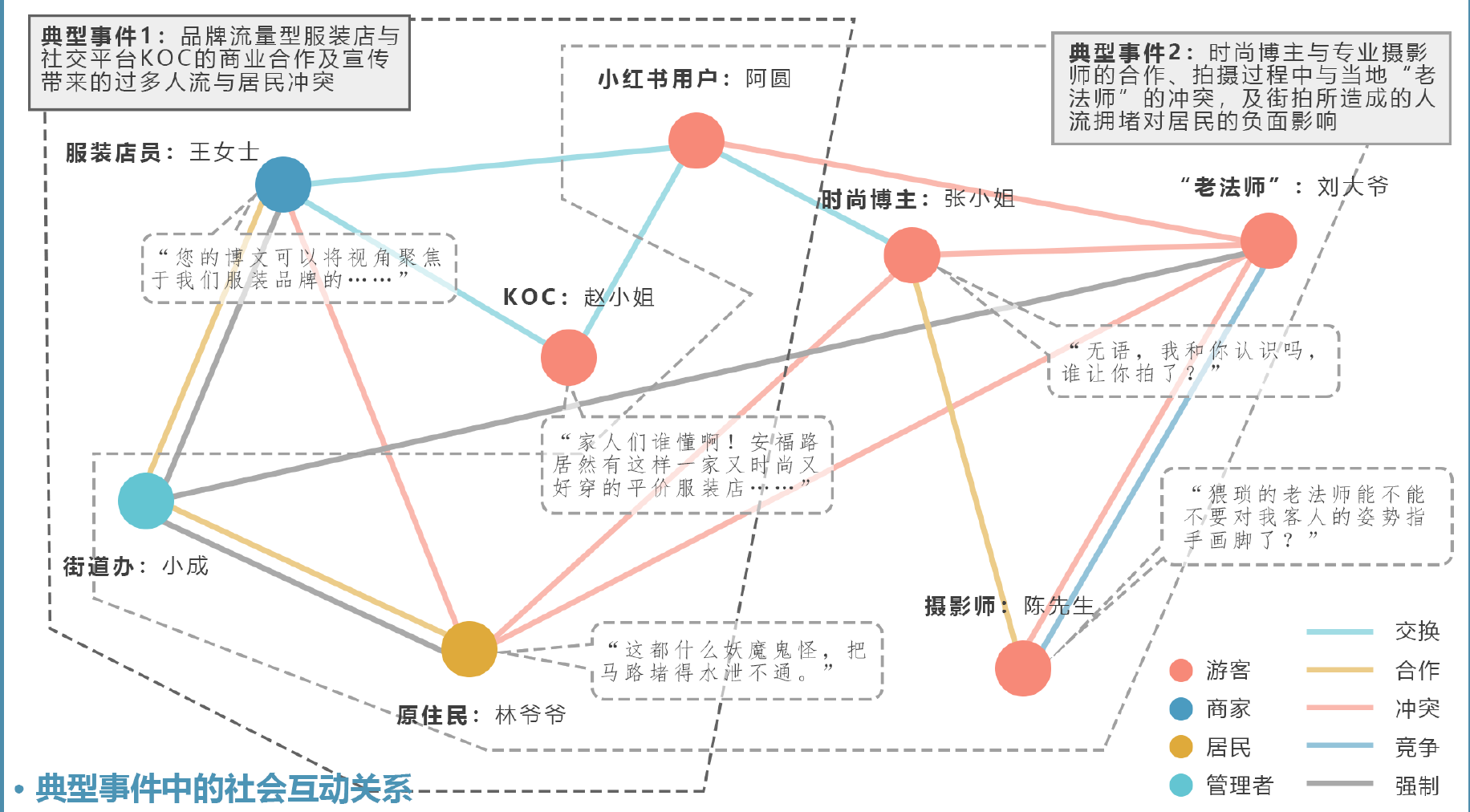
品牌商家提供商品、活动和空间,创作者将其转化为个人视角的内容,游客通过到访与分享延续传播,居民和管理者共同影响体验的承接。关系分析呈现了商家与创作者的合作、不同拍摄人群的竞争,以及活动客流与日常生活的摩擦。这些关系帮助识别内容从哪里产生、如何流通,以及体验在哪些环节需要协调。Brands provide products, events and spaces; creators interpret them through personal stories; visitors extend their circulation through visits and sharing; residents and administrators shape the experience. Relationship analysis revealed cooperation between businesses and creators, competition among photography users and friction between event crowds and everyday life. These connections help identify where content originates, how it circulates and where the experience needs coordination.
内容种草与体验的互动机制Content discovery & experience
安福路与小红书的互动,可以从用户接触内容后的连续行动来理解:兴趣内容建立街区印象,搜索和攻略帮助用户安排到访,门店与活动承接期待,体验后的分享又进入下一轮传播。小红书连接了到访前的信息获取与到访后的口碑表达,使街区成为不断被发现、体验和重新讲述的内容主题。Interactions between Anfu Road and Xiaohongshu can be understood through a sequence of user actions: interest-based content builds a district image, searches and guides help plan visits, stores and events meet expectations, and shared experiences feed further discovery. Xiaohongshu connects information gathering before a visit with word of mouth afterwards, making the district a recurring subject of discovery, experience and storytelling.
兴趣内容建立认知Interest-based content builds recognition
穿搭、咖啡、设计与街拍等内容,将安福路转化为不同兴趣人群能够理解的生活方式场景。品牌故事经由创作者的体验、照片和个人表达进入用户视野,街区也由一个地名变成“值得去逛的地方”。内容策划应围绕用户想体验的生活,而把品牌与商品放进具体情境,让种草具有明确的兴趣入口。Fashion, coffee, design and street photography present Anfu Road as a lifestyle setting for different interests. Creators bring brand stories to users through experiences, photographs and personal expression, turning a place name into somewhere worth exploring. Content planning should begin with the life users want to experience, placing brands and products in concrete situations with clear points of interest.
搜索与攻略推动到访决策Searches and guides support visit decisions
产生兴趣后,用户还需要回答“去哪里、何时去、怎么逛、有什么值得参与”。地点、路线、活动时间、商品特色和体验细节,可以把一篇吸引眼球的笔记转化为可执行的到访计划。对品牌和商户而言,内容不仅需要好看,还应方便用户检索、比较与收藏,让种草自然衔接到门店和活动。After interest is sparked, users need to know where and when to go, how to explore and what to take part in. Locations, routes, event times, product features and experience details can turn an engaging post into a practical visit plan. Brand and merchant content should be easy to search, compare and save as well as visually engaging, connecting discovery with stores and events.
线下体验兑现内容期待Offline experiences deliver on content expectations
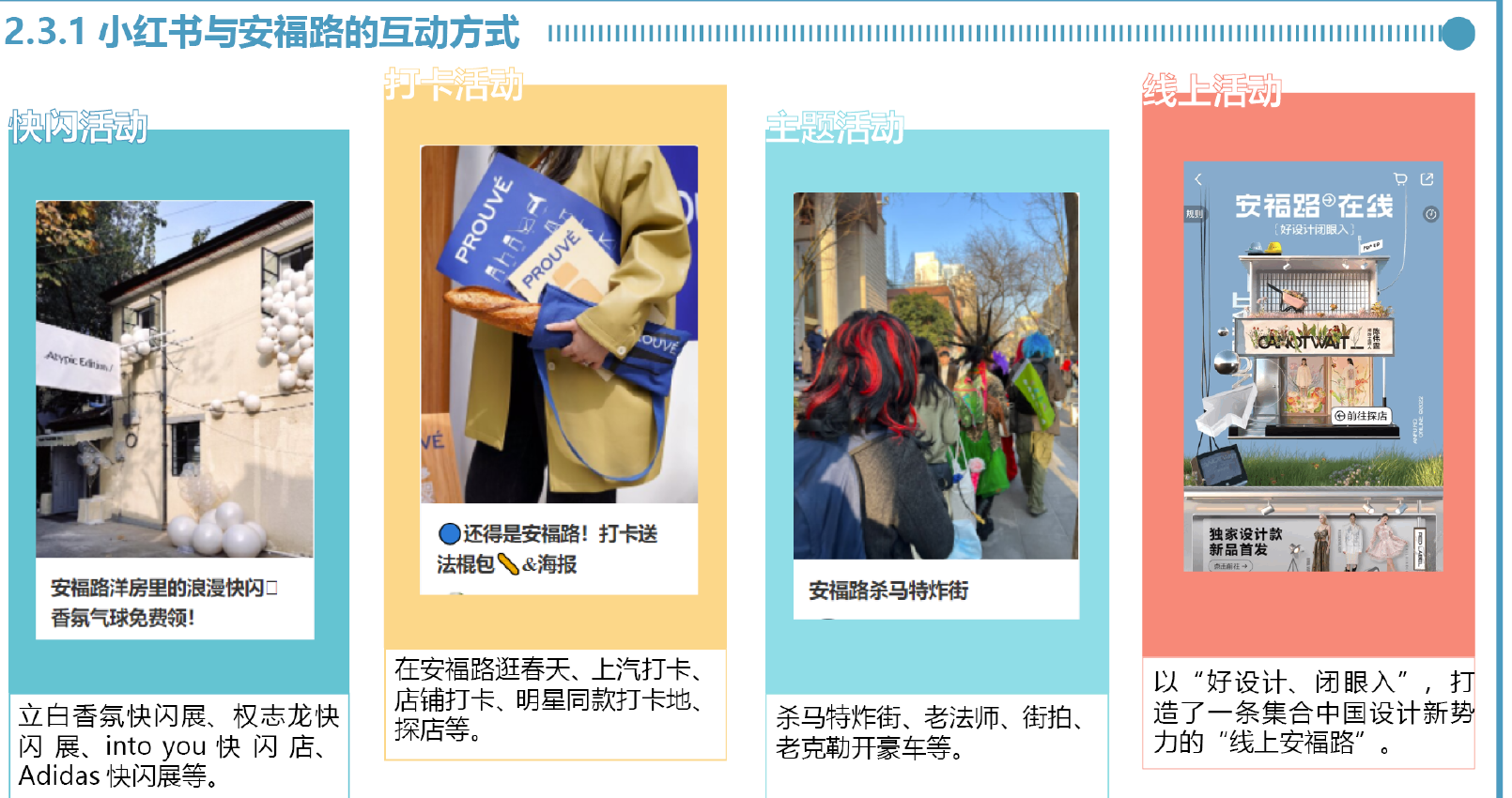
特色门店、品牌快闪与主题活动,为线上内容提供可以亲身参与的对应场景。体验设计需要围绕内容里承诺的亮点,安排探索、试用、互动和购买机会,并兼顾排队、通行与居民生活。用户抵达后能否获得与期待一致的体验,决定了内容吸引来的关注如何沉淀为品牌印象与下一次到访理由。Distinctive stores, pop-ups and themed events give online content a setting people can experience in person. Design should deliver the highlights promised in content through exploration, trials, interaction and purchase opportunities, while accommodating queues, access and residential life. Meeting expectations helps turn attention into a lasting brand impression and a reason to return.
用户分享反哺下一轮种草User sharing feeds the next discovery cycle
到访后的照片、体验评价与实用攻略,为街区补充了新的用户视角,也成为其他人判断是否到访的参考。品牌可以围绕产品细节、参与过程与在地故事提供表达素材,引导用户讲述自己的体验;评论中的疑问与反馈又能帮助调整后续内容和现场服务。线上线下由此形成“内容引导体验、体验丰富内容”的双向循环。Photos, reviews and practical guides add fresh perspectives after a visit and help others decide whether to go. Brands can offer material for personal stories through product details, participation and local narratives. Questions and feedback in comments can inform subsequent content and on-site services. This creates a two-way cycle: content guides experience, and experience enriches content.
- 兴趣种草Interest-led discovery
- 搜索与到访Search & visits
- 体验与参与Experience & participation
- 分享反哺内容Sharing feeds content
策略迭代Strategy refinement
围绕小红书的兴趣社区定位与品牌在街区中的经营实践,策略可以从单次活动的曝光,进一步延伸到持续的内容组织:找到用户的兴趣入口,提供清晰的到访信息,以参与体验积累新的分享素材,让品牌、创作者与街区之间形成持续互动。Xiaohongshu’s interest-based community and brands’ district practices suggest extending strategy beyond individual events to sustained content planning: identify points of interest, provide clear visit information and create participatory experiences that generate new stories, supporting ongoing interaction among brands, creators and the district.
按兴趣组织内容,连接同好Organize content around shared interests
小红书以“生活兴趣社区”为定位,强调兴趣发现、同好连接,以及从线上获得灵感、到线下体验、再回来分享的过程。对安福路而言,内容可以围绕穿搭、设计、咖啡与步行探索形成不同主题,将创作者的个人表达、商户特色与街区路线组合起来。策略重点是让用户在自己关心的内容里发现街区,并用攻略与互动延续这份兴趣。Xiaohongshu describes itself as a lifestyle-interest community, emphasizing discovery, like-minded connections and a journey from online inspiration to offline experiences and sharing. Anfu Road content can be organized around fashion, design, coffee and walking, combining creators’ personal expression with merchant features and district routes. The strategy is to help users discover the district through their interests and sustain that interest through useful guides and interaction.
把传播话题转化为参与体验Turn shared stories into participatory experiences
阿迪达斯安福路门店以“安福”“长乐”命名产品,“进城办事”商品文案在网络走红后,门店又推出同款印花T恤定制,将传播话题接入具体商品与现场参与。萨洛蒙安福路概念店则结合历史建筑与品牌文化,形成具有在地特征的体验场景。这些实践提示,内容策划与体验设计可以同步推进:线上用鲜明的故事与产品细节吸引兴趣,线下用定制、探索或互动丰富用户的分享内容。The adidas Anfu Road store named products after Anfu and Changle roads. After its “进城办事” product wording gained attention online, the store offered T-shirts customized with the phrase, connecting a shared story to products and participation. SALOMON’s Anfu concept store combines a historic building with brand culture to create a locally distinctive experience. These practices suggest planning content and experience together: recognizable stories and product details spark online interest, while customization, exploration and interaction generate material for sharing.
让街区体验支撑持续传播Let district experiences sustain communication
武康路—安福路街区以“建筑可阅读”与“主客共享”组织体验,历史风貌和日常生活也为内容提供了持续题材。运营可以把商户空间、公共区域与步行路线衔接起来,明确活动时段、排队和拍摄边界,让用户既能参与品牌体验,也能感受街区本身。舒适、连贯的体验,是用户愿意分享与再次到访的基础。The Wukang Road–Anfu Road district emphasizes architectural interpretation and spaces shared by residents and visitors. Its historic character and everyday life offer ongoing subjects for content. Operations can connect stores, public areas and walking routes, with clear event times, queues and photography boundaries, allowing visitors to engage with both brands and the district. A comfortable, coherent experience gives people a reason to share and return.
从内容种草到街区体验From content discovery to district experiences
这个案例的核心启发是:小红书连接了街区被发现、被选择与被分享的过程。兴趣内容塑造认知,创作者的表达与用户讨论丰富品牌故事,搜索、收藏和攻略帮助用户形成到访计划;线下门店与活动承接这些期待,再将参与过程转化为新的内容。策略应以内容种草为起点,把兴趣主题、实用信息与用户分享持续组织起来,同时让现场体验兑现内容里的到访理由。评估也应沿着这条链路观察收藏与咨询、实际参与、购买和复访,让传播与体验共同推动下一轮种草。The case’s central lesson is that Xiaohongshu connects how a district is discovered, chosen and shared. Interest-based content builds recognition; creators’ expression and user discussions enrich brand stories; searches, saves and guides help people plan visits. Stores and events then deliver those expectations and turn participation into new content. Strategy should start with content discovery, continuously connecting interest themes, useful information and user stories, while delivering the reasons to visit promised online. Evaluation can follow the same journey through saves and inquiries, attendance, purchases and return visits, allowing communication and experience to feed the next discovery cycle.